
How to Start a Rice Mill in India
By Bajrang Khaitan · Published
From Bajrang Khaitan: how to start a rice mill in India — location, licences, start sequence, land, machinery, and a cost rule of thumb.
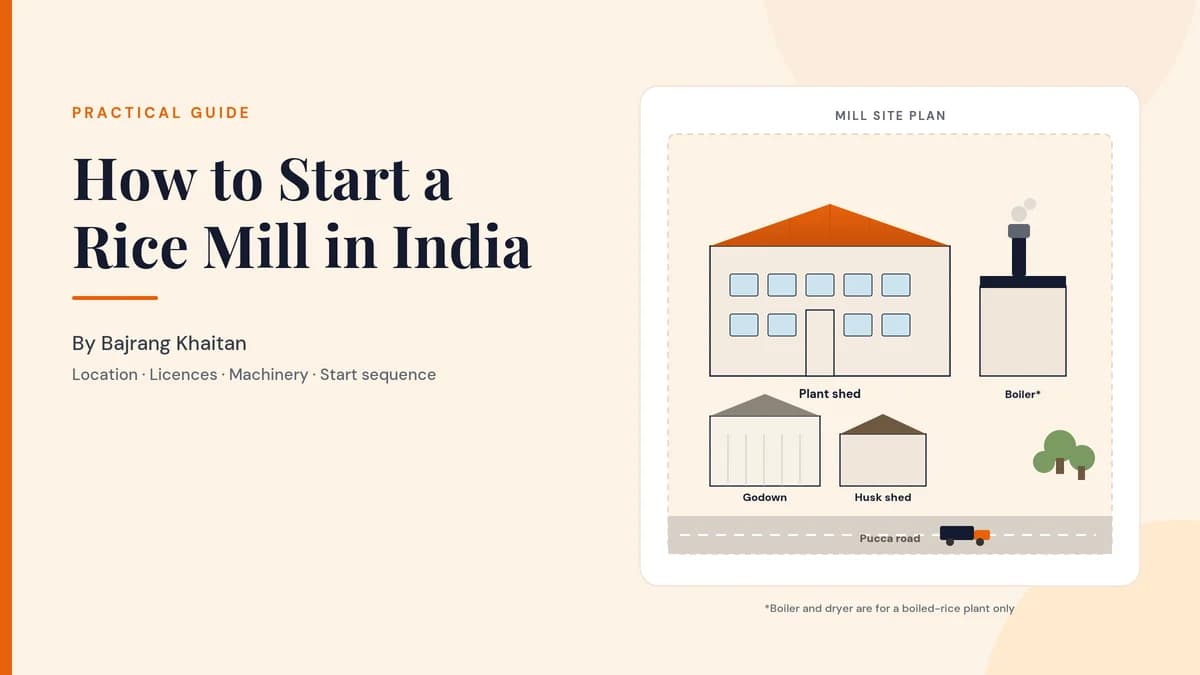
People often ask me how to start a rice mill in India — where to buy the land, which licences are needed, what machinery to install, and what the work actually costs. This is the practical sequence I follow with new owners. The figures here are rules of thumb. Every site is different, so you should get a project report made for your own capacity and location before you commit money.
The common mistake new owners make
The biggest mistake is that people buy land in a hurry. They do not check whether there is a proper arrangement for water to drain, whether the electricity connection is properly nearby, or whether there is proper road access. They just buy the land in a hurry, and then they get badly stuck.
A rice mill is a long-term plant. Take the location checks seriously before you pay for the plot.
Location checklist
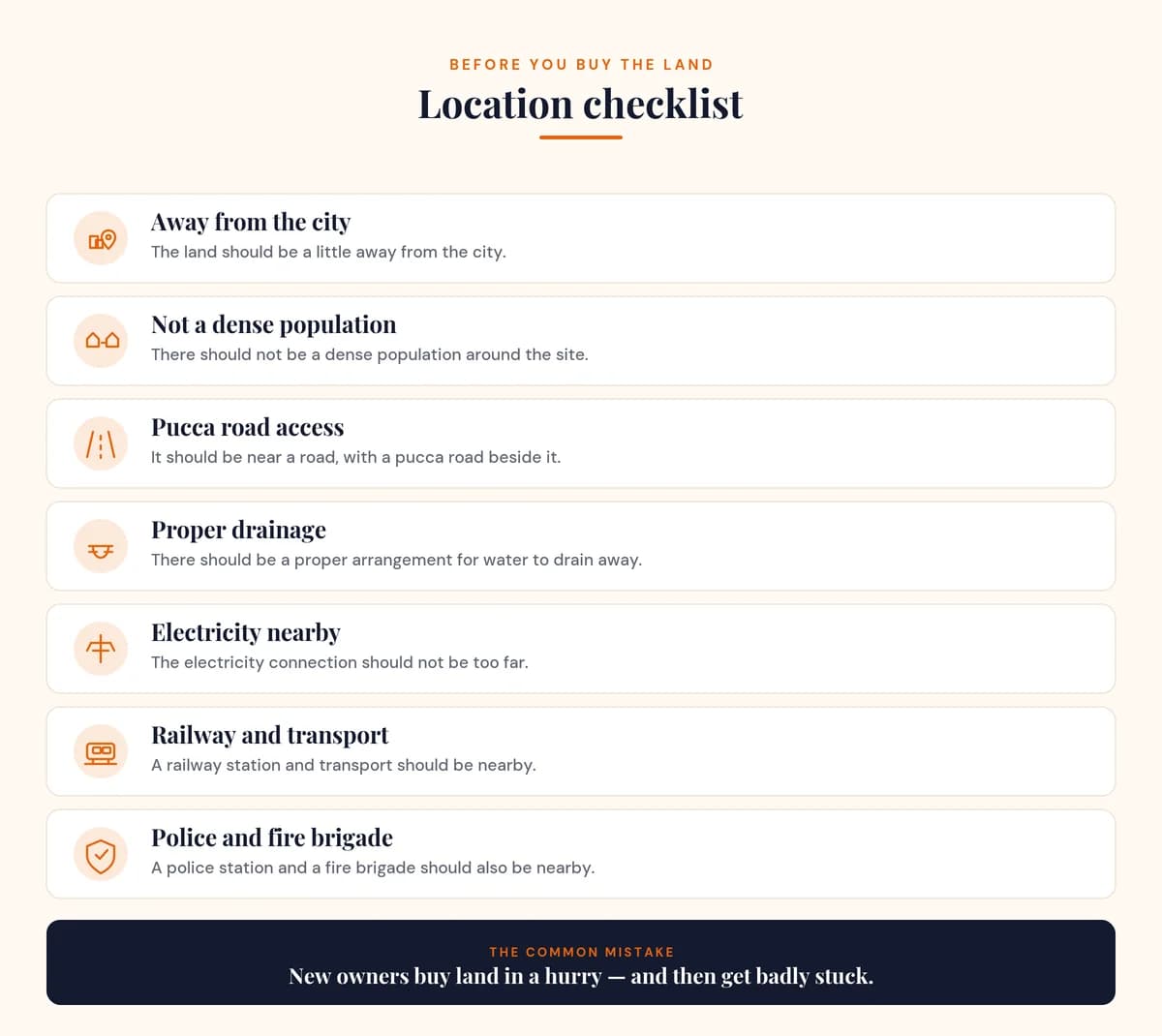
The land should be:
- A little away from the city
- Not next to a dense population
- Near a road, with a pucca road beside the site
- With a proper arrangement for water to drain away
- With the electricity connection not too far away
- With a railway station and transport nearby
- With a police station and a fire brigade nearby as well
How much land you need
The land requirement changes with the capacity of the plant.
- For a 2- to 4-tonne plant, roughly 3 acres is enough. For a 4-tonne plant, 2 to 3 acres is plenty.
- For a larger plant, you need about 5 acres.
- If you put up a 6-tonne, 8-tonne or 12-tonne plant, the land you need increases as the plant grows.
A rule of thumb on cost
The cost is different for each capacity. As a rule of thumb, it comes to about ₹2 crore per tonne of capacity. I use the same figure for 2- and 4-tonne plants and for 6-, 8- and 12-tonne plants. There is not much cost difference between an arwa plant and a boiled plant; the boiled plant needs a boiler and a dryer, and the arwa plant does not.
This is a rough figure, not a quotation. Costs vary with the site, the civil work and the machinery you choose. If you want a larger godown than the usual one, that will cost extra. Get a project report prepared for your own capacity before you apply for a loan or place machinery orders.
You will also need sheds — for the plant, for the boiler (on a boiled plant), for husk, and a separate shed for the paddy-cleaner machine. Some people build the main shed larger so they can also store rice in it. There should still be a small godown for paddy and rice. A rice godown is typically sized to hold 2 to 3 days of production.
For working capital, you will also need a cash-credit limit of roughly one month’s stock of paddy.
The start sequence, step by step
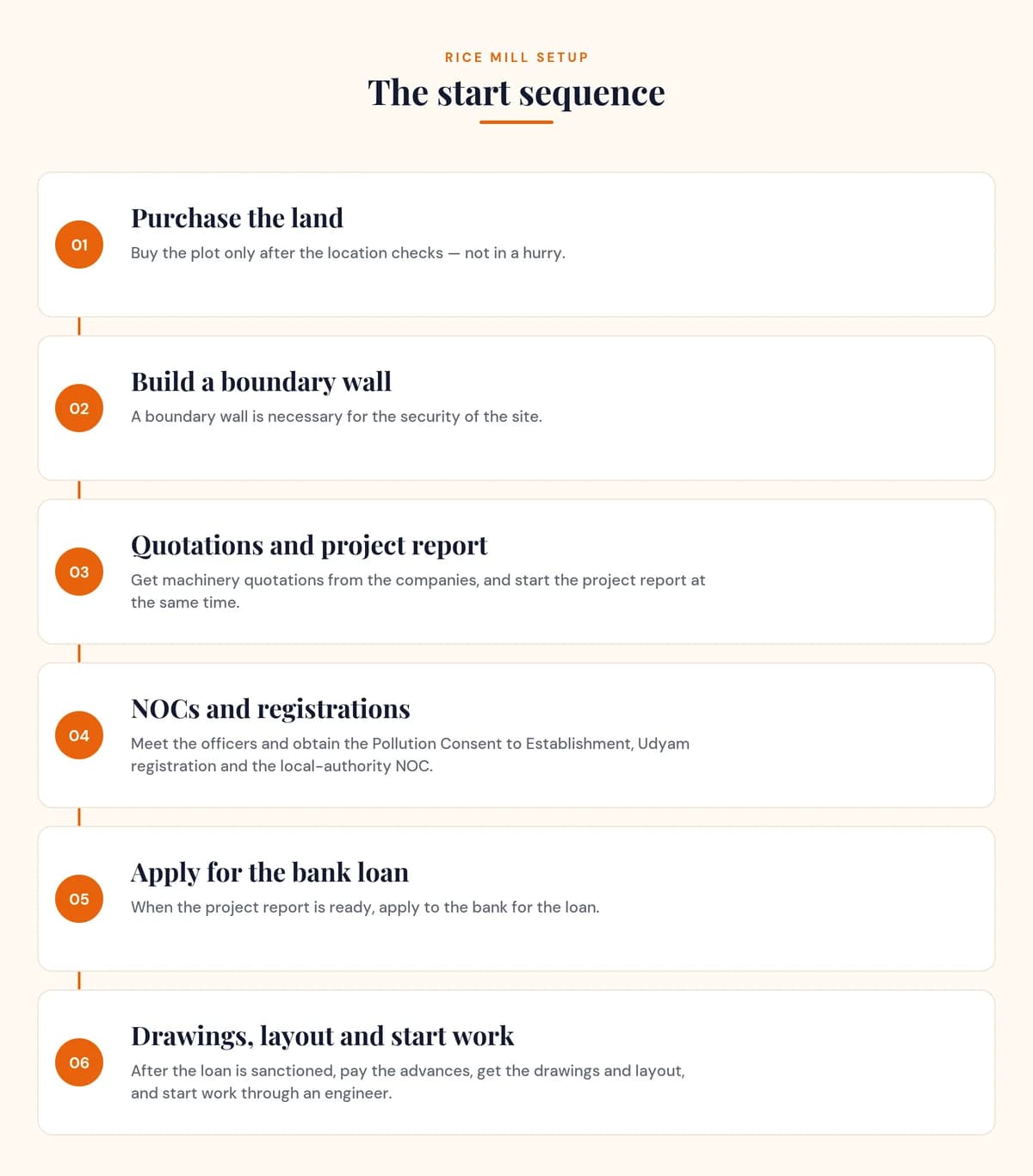
To start a rice mill, this is the order of work:
- Purchase the land. First we have to buy the land — after the location checks above, not in a hurry.
- Build a boundary wall. A boundary wall is necessary for security.
- Get machinery quotations and start the project report. On one side, we get quotations for the rice-mill machinery from all the companies, and we start preparing a project report. The two can run together.
- Obtain the NOCs and registrations. While the project report is getting underway, we meet the government officers and complete the paperwork: the Pollution Consent to Establishment NOC, Udyam registration, and the local-authority NOC.
- Apply for the bank loan. When the project report is ready, we apply to the bank for a loan.
- After the loan is sanctioned, start the work. As soon as the loan is sanctioned, we pay an advance to the companies, get the machine drawings and the layout, and start the work through an engineer.
Rice mill licences and permissions
For a rice mill setup in India, these are the licences and permissions you need:
- GST
- FSSAI
- Pollution NOC (Consent to Establishment)
- Factory licence
- Udyam registration
- Permission from the local authority, such as the panchayat or the municipality
The documents, fees and timelines depend on your state and on the local office. This is one of the points we work through while the project report is being prepared and while we meet the officers.
Subsidies and finance
There is subsidy too. There is a capital subsidy, there is also an interest subsidy, and you also get some subsidy on power. Scheme names, rates and eligibility change, and they depend on the state, so treat these as the heads to ask about — not as a promise of a particular amount. Your project report and your bank are the right place to work out what you can actually claim.
Separately from subsidy, plan for a cash-credit limit of roughly one month’s paddy stock.
Machinery: arwa vs boiled rice
In a rice mill, two kinds of rice are produced: arwa (raw) and boiled (parboiled). The main process machines are the same. The difference is at the front of the line.
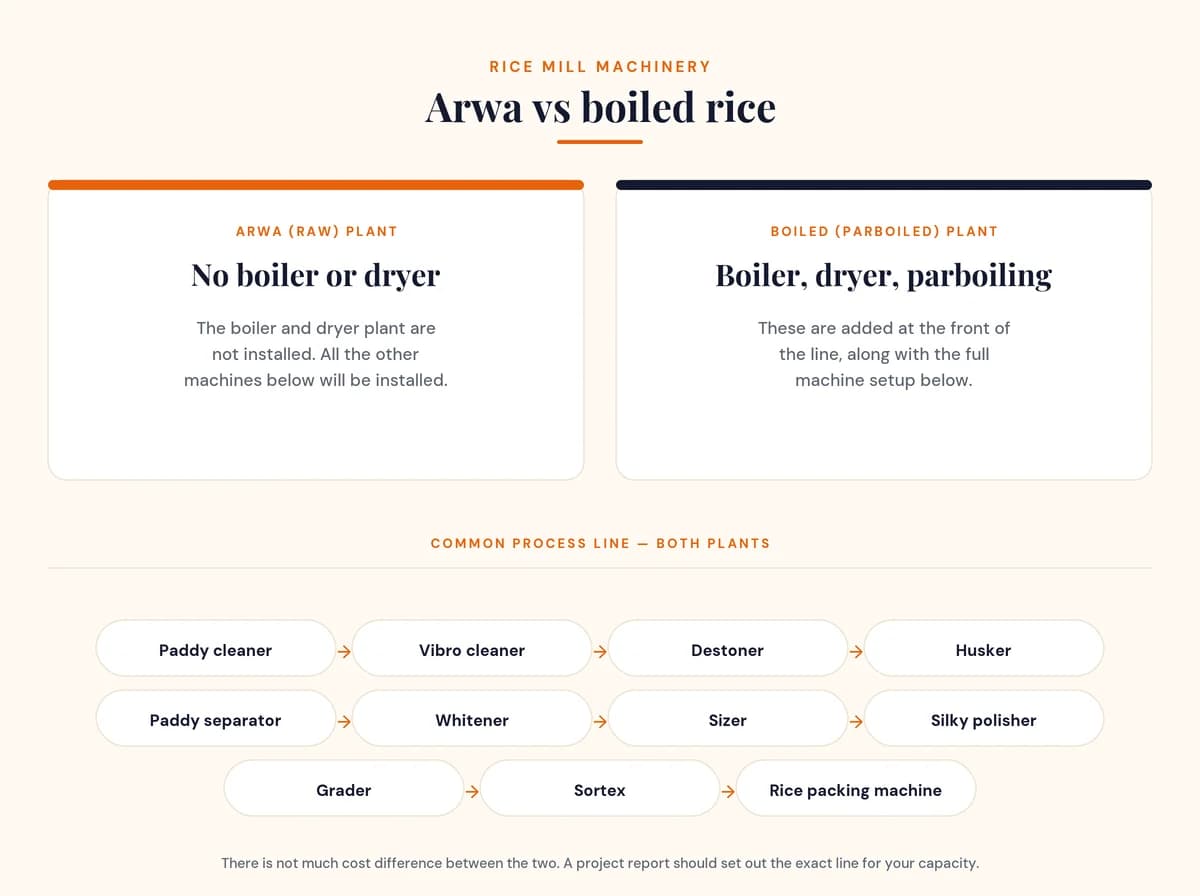
These machines are used in the plant:
- Paddy cleaner
- Vibro cleaner
- Destoner
- Husker
- Paddy separator
- Whitener
- Sizer
- Silky polisher
- Grader
- Sortex
- Rice packing machine
For a boiled or parboiled plant, you also have to install a boiler, a dryer and parboiling. If you are putting up an arwa plant, the boiler and dryer are not installed. All the other machines will be installed.
How I can help
For a rice-mill process plant I help with all of this: I get the project report made, I help with machinery selection and with the setup, and I can also provide manpower for running the mill.
If you are planning a new mill, book a free 20-minute intro call and we can talk through your location, capacity and the next step. You can also write to me or start with a longer consultancy discussion.
Frequently asked questions
How much does it cost to set up a rice mill in India?
As a rule of thumb, about ₹2 crore per tonne of capacity. The same figure applies across the 2-, 4-, 6-, 8- and 12-tonne sizes I use as examples. Costs vary, and this is not a quotation. Get a project report made for your own site and capacity.
How much land is needed for a rice mill?
For a 2- to 4-tonne plant, roughly 3 acres is enough (2 to 3 acres is plenty for a 4-tonne plant). A larger plant needs about 5 acres. For 6-, 8- or 12-tonne plants, the land requirement increases with the plant.
What licences do I need to start a rice mill?
GST, FSSAI, a pollution NOC (Consent to Establishment), a factory licence, Udyam registration, and permission from the local authority, such as the panchayat or the municipality.
What is the difference between an arwa and a boiled rice mill?
There is not much difference in cost. In an arwa plant the boiler and dryer are not used. In a boiled plant, parboiling, a boiler and a dryer are installed, along with the rest of the machines.
What is the first step in a rice mill setup?
Buy the land — but do not buy it in a hurry. First check drainage, electricity and road access, and the other location points in this guide. After the land, build a boundary wall, then take machinery quotations and start the project report.